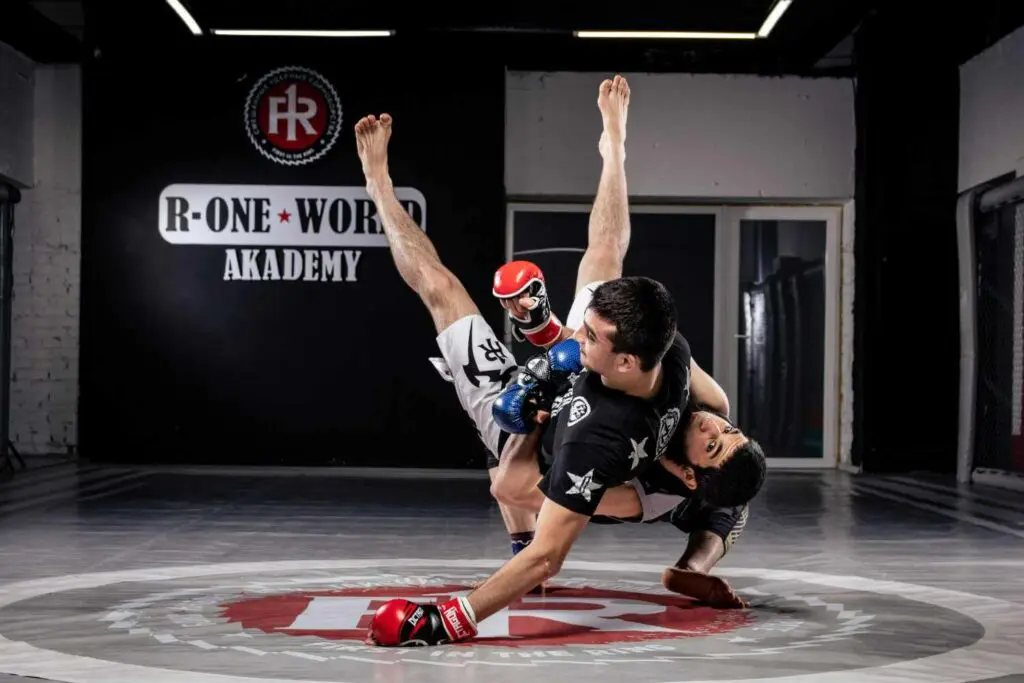
Bruce Lee once said, “The successful warrior is the average man, with laser-like focus.” That idea sits at the heart of MMA beginner fundamentals.
When you first step onto the mat, everything can feel overwhelming. The punches, kicks, takedowns, and ground positions seem like a lot to process at once.
But every skilled fighter started in the same place, with limited experience and plenty of questions.
Mixed martial arts is not just about throwing punches or wrestling someone to the ground. It is about how striking and grappling connect as one fluid system. You learn to move between ranges, from long-range kicks to close clinch work and ground control, while staying balanced, protected, and ready to respond.
Our goal here is simple. We want to break down beginner fight training concepts so they make sense. We cover basic MMA moves, defensive skills, striking and grappling fundamentals, transitions, energy management, sparring, and the progression beginners can follow as their skills improve.
Read on, and let us walk you through what you need to understand before more advanced training begins.
- What MMA Beginner Fundamentals Actually Include
- Why MMA Is More Than Learning Separate Martial Arts
- Understanding the Main Ranges in MMA
- Beginner MMA Striking Fundamentals
- MMA Grappling Fundamentals Beginners Should Understand
- How Striking-to-Grappling Transitions Work
- MMA Defensive Fundamentals Across MMA Ranges
- Energy Management for MMA Beginners
- MMA Sparring Basics and Controlled Skill Development
- Common MMA Beginner Mistakes
- A Practical MMA Skill Progression for Beginners
- How MMA Beginner Fundamentals Create a Foundation for Advanced Skills
- Common Questions
- Your Journey Into MMA Starts Right Here
What MMA Beginner Fundamentals Actually Include
When people first walk into a gym, they often think MMA is mostly punching and kicking. But MMA beginner fundamentals cover much more. They include striking, clinch work, takedowns, ground grappling, defense, movement, and position recovery.
Each area connects to the others. Understanding those connections helps us set realistic goals and avoid the common mistake of jumping into complicated techniques or hard sparring before building a reliable base. Students researching structured MMA classes in Miami will often see these same core areas emphasized because they form the foundation of progressive MMA training.
Let’s break them down.

Striking
Striking in MMA includes punches, kicks, elbows, and knees. Beginners usually start with a solid stance, reliable guard, basic footwork, and straight punches.
Good striking is not about maximum power. It is about form, timing, balance, and control.
We learn to land techniques while staying protected and ready to move into another range.
A punch that knocks us off balance or leaves our hands down creates problems even if it lands. That is why clean mechanics matter from the beginning.
Clinch Work
The clinch is the space between striking and grappling. It happens when two fighters get close enough to control each other’s arms, head, or body.
For beginners, clinch training teaches balance, posture, pressure, and control.
We can use the clinch to strike, set up takedowns, or create enough space to disengage. It is one of the clearest examples of how MMA striking and grappling basics overlap.
Takedowns
Takedowns move an exchange from standing to the ground. Common beginner examples include single-leg and double-leg entries, along with basic trips.
At first, we focus on posture, timing, level changes, and safe entries.
Rushing a takedown without proper position can leave us exposed to strikes, sprawls, or reversals. Technique comes before intensity.
Ground Grappling
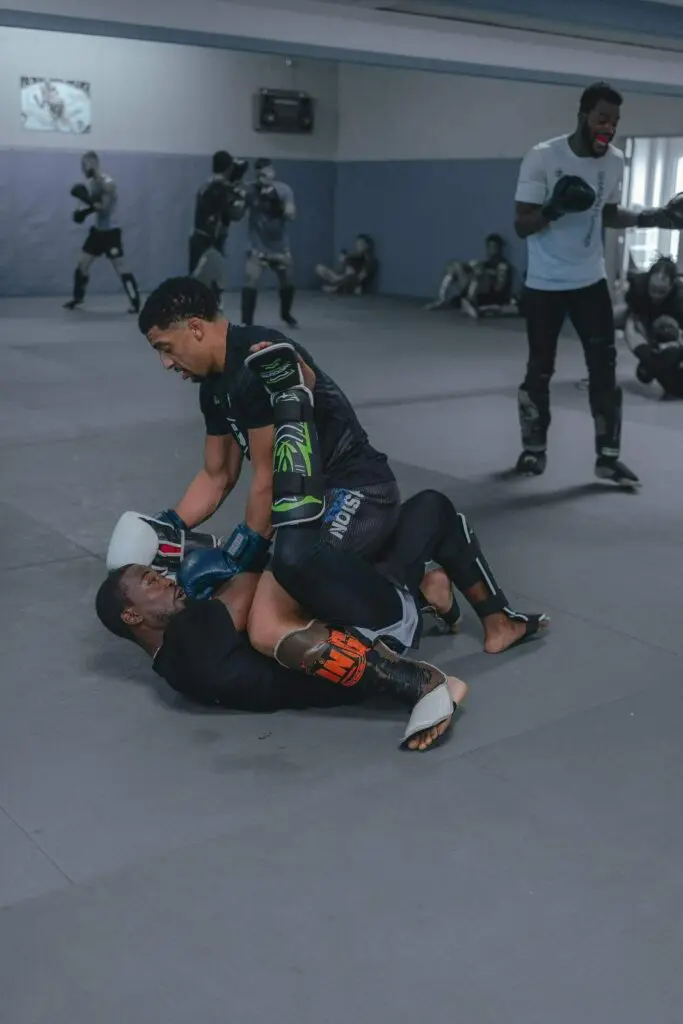
Ground grappling covers what happens once the fight reaches the mat. Beginners learn major positions such as guard, side control, mount, and back control.
We also learn how to improve position, maintain balance, escape, and eventually apply submissions.
Position comes first. A submission becomes much easier when we already control where the opponent can move.
Defense and Position Recovery
Defense is not limited to blocking punches. It includes defending kicks, stopping takedowns, escaping bad ground positions, maintaining posture, and recovering after a failed attack.
Everyone ends up in bad positions during training. Knowing how to stay calm and work back toward safety is one of the most useful beginner MMA skills we can develop.
Why MMA Is More Than Learning Separate Martial Arts
Many beginners assume MMA means learning boxing, wrestling, and Brazilian Jiu-Jitsu separately and then combining them later.
But MMA is its own discipline.
The skills have to function together. A boxing stance that works perfectly in boxing may leave the legs more exposed to takedowns or kicks. A grappling movement that works in pure submission grappling may require adjustment when strikes are involved.
The goal is not simply to collect techniques from several sports. It is to understand how they connect.

How MMA Changes Distance and Range
Range changes constantly in MMA.
One moment we may be kicking from the outside. A few seconds later, we may be exchanging punches, fighting for clinch control, defending a takedown, or working from the ground.
Beginners need to understand these changes early because every range requires different decisions.
Knowing where we are helps us know which techniques are available and which risks we need to manage.
Why Techniques Must Work During Transitions
A technique that works well in isolation may fail during a transition.
A kick may look excellent during pad work but leave us vulnerable to a takedown if we recover slowly. A punch combination may land cleanly but put us too close to an opponent who wants to clinch.
That is why beginner fight training eventually has to include context.
We learn punches that set up clinches, clinches that lead to takedowns, and takedowns that flow into positional control.
Connecting Skills Instead of Collecting Techniques
More techniques do not automatically create more ability.
Beginners often improve faster by developing a small number of reliable skills and learning how to connect them across different situations.
Quality of connection matters more than quantity of technique.
Understanding the Main Ranges in MMA
Range awareness is one of the most important MMA beginner fundamentals. Knowing where we are in relation to our opponent affects every decision.
There are several overlapping ranges beginners should recognize.
Long Striking Range
Long range is where kicks, jabs, and longer attacks are most useful.
We have more time to see attacks coming, but we also need good distance control to make our own techniques land.
Front kicks, low kicks, jabs, and movement are common tools here.
Boxing Range
Boxing range is close enough for combinations but not yet full clinch distance.
Footwork, guard, head movement, and short defensive reactions become especially important.
This is where many basic MMA striking exchanges occur.
Clinch Range
Clinch range is very close. Fighters can control each other’s arms, head, or torso while using knees, short punches, takedown setups, and positional pressure.
Many beginners initially feel uncomfortable here because the distance is crowded.
Learning to stay balanced and calm in the clinch is essential because it connects striking directly to grappling.
Takedown Range
Takedown range overlaps with boxing and clinch distance.
This is where level changes, shots, trips, and throws become possible.
Timing matters more than strength. A well-timed takedown against an off-balanced opponent is far more efficient than trying to force one against someone with strong posture.
Ground Range
Ground range begins once the exchange reaches the mat.
Here, position becomes especially important. Guard, half guard, side control, mount, and back control each create different opportunities and risks.
Beginners should first learn to recognize these positions and respond correctly before worrying about complicated submissions.
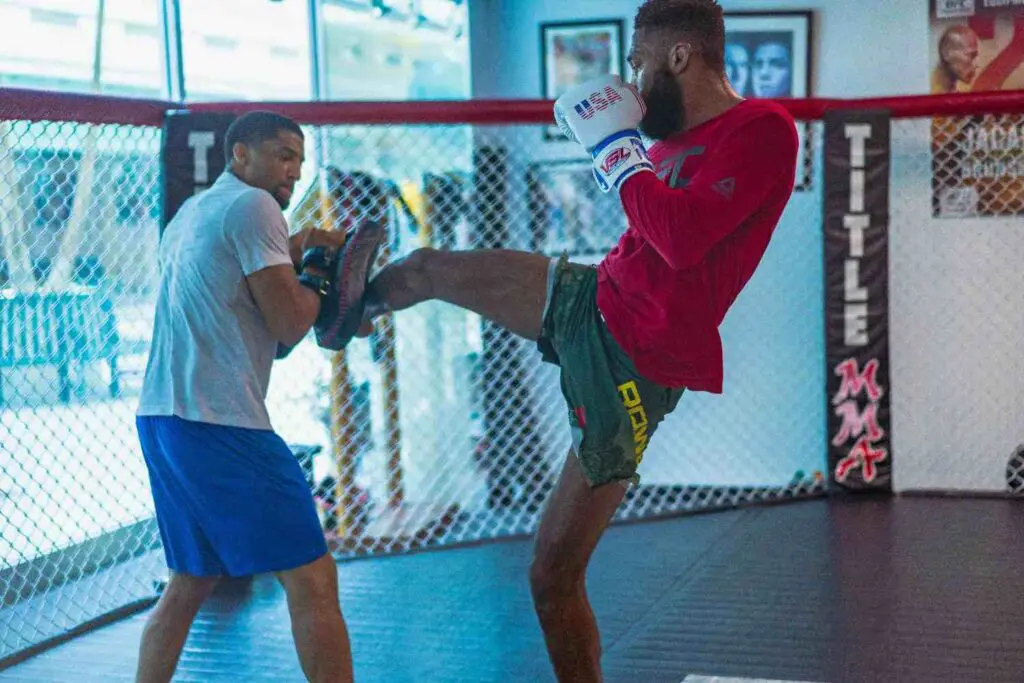
Beginner MMA Striking Fundamentals
Striking in MMA is different from striking in boxing or kickboxing alone because we always have to consider the grappling threat.
Every punch or kick creates a brief moment of vulnerability. Good MMA striking teaches us to attack without sacrificing our balance or defensive position.
Building a Reliable Guard
Our guard protects the head and body while keeping us ready to strike.
In MMA, our stance and guard also need to account for takedowns. We cannot become so upright or narrow that we lose our ability to defend level changes.
Beginners gradually learn how hand position, hip position, stance width, and posture work together.
Straight Punches Before Complex Combinations
The jab and cross are among the most useful punches for beginners.
They are direct, efficient, and easier to recover from than long combinations.
Before learning complicated sequences, we develop the habit of punching cleanly and returning our hands to a defensive position.
Simple techniques performed well are usually more useful than complex combinations performed poorly.
Basic Kicks and Safe Recovery
The low kick and front push kick are common starting points because they teach distance and balance without requiring overly complicated mechanics.
After every kick, we return to stance quickly.
That recovery matters because remaining off-balance makes us easier to counter or take down.
Defending While Remaining Ready to Grapple
MMA defense requires dual awareness.
We may be blocking punches while also watching for a level change. We may slip a strike while making sure our stance remains strong enough to defend a takedown.
This ability develops gradually through drilling and controlled partner work.
MMA Grappling Fundamentals Beginners Should Understand
Even students who prefer striking need grappling skills.
If we cannot defend takedowns, recover position, or understand what is happening on the ground, our striking becomes much harder to use once the range changes.
Maintaining Base and Balance
Base is our ability to remain stable and difficult to move.
Good balance allows us to defend takedowns, apply pressure, and move without falling out of position.
Beginners develop base through stance work, pummeling, level changes, posture drills, and controlled wrestling exercises.
Understanding Takedown Entries
A takedown does not begin when we grab someone’s legs. It begins with distance, timing, and positioning.
For a basic double-leg, we learn how to change levels, step into range, maintain posture, and continue driving through the movement.
Understanding these entries also improves defense. When we recognize the beginning of a takedown earlier, we have more time to react.
Positional Control Before Submissions
Beginners often want to learn submissions immediately.
But submissions become much more reliable when we first control the position.
Side control, mount, and back control teach us how to use body position and pressure to limit movement.
Once control becomes stable, submissions are easier to understand and apply.
Escaping Bad Positions
Everyone gets stuck.
Beginner grappling therefore includes escapes from mount, side control, back control, and other disadvantageous positions.
Basic techniques such as the bridge-and-roll and elbow-knee escape help us understand how frames, hip movement, and timing create opportunities to recover.
How Striking-to-Grappling Transitions Work
Transitions are where MMA becomes especially distinct.
The ability to move smoothly from striking into clinching, takedowns, and ground control turns individual techniques into a complete fighting system.
Studying MMA striking to grappling transitions helps beginners understand why punches, level changes, clinch entries, takedowns, and positional control should eventually be practiced as connected movements instead of unrelated skills.
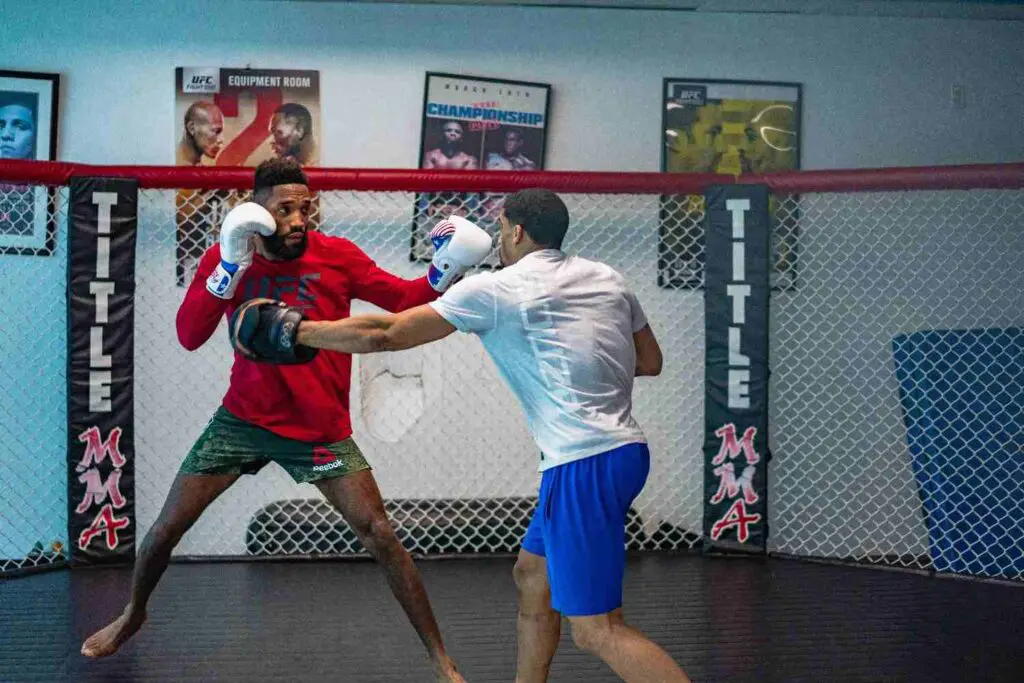
Using Strikes to Create Grappling Openings
Strikes create reactions.
A jab may make an opponent raise their guard. A combination may cause them to move backward or shift their weight.
Those reactions can create opportunities for clinch entries or takedowns.
Instead of seeing striking only as an end point, we start learning how one action creates the next.
Closing Distance Safely
Walking straight toward an opponent is rarely the safest way to enter grappling range.
We use jabs, feints, angles, and level changes to make our entry less predictable.
This also helps us avoid taking unnecessary strikes while moving closer.
Moving From the Clinch to a Takedown
Once we establish a useful clinch position, takedowns become easier to set up.
We can use pressure, body positioning, and changes in direction to disrupt balance.
If the opponent pushes against us, pulls away, or shifts weight to one leg, that reaction may create the opening for a trip or takedown.
Why Beginners Should Practice Smooth Transitions
Disconnected movements waste energy.
If we stop completely after striking, reset, and then suddenly attempt to grapple, our movements become easy to recognize.
Transition drills teach us to move from one range to another more naturally.
At first, we practice slowly against predictable resistance. As coordination improves, partners can gradually add more realistic reactions.
MMA Defensive Fundamentals Across MMA Ranges
MMA defensive fundamentals are just as important as offensive ones.
Defense allows us to stay safe, recover position, and create new opportunities instead of constantly reacting from disadvantage.
Protecting Yourself While Striking
Every strike creates some exposure.
When we punch, we need to keep the opposite hand ready to protect us. When we kick, we need to maintain balance and recover quickly.
Simple habits such as keeping the chin protected and returning to guard reduce unnecessary openings.
Defending Takedown Attempts
Takedown defense begins with recognition.
When we notice a level change or entry, we respond by moving our hips, maintaining posture, and preventing the opponent from controlling our legs.
The sprawl is one of the most important basic MMA defensive movements.
Repeated drilling helps turn it into a more natural response.
Recovering Position on the Ground
Being taken down does not mean the exchange is over.
From the bottom, we create frames, protect ourselves, recover guard, and work toward better positioning.
Random movement usually wastes energy. Good defensive movement has a clear purpose.
Knowing When to Change Range
Sometimes the best choice is resetting the exchange.
If we are losing a clinch battle, creating space may be smarter than forcing the position. If we are on the ground and have a safe opportunity to stand, returning to our feet may make sense.
Range management is part of defense.
Energy Management for MMA Beginners
MMA can feel exhausting, especially during the first few months.
But beginners often become tired because they are inefficient, not simply because they lack conditioning.
Why Beginners Tire Quickly
New students commonly tense their shoulders, grip too hard, hold their breath, and use maximum strength during every movement.
That burns energy quickly.
Learning when to relax is just as important as learning when to apply force.
Relaxation Versus Unnecessary Tension
Relaxation does not mean being passive.
It means remaining prepared without keeping every muscle tense.
Loose shoulders, controlled breathing, and relaxed movement improve speed and efficiency.
Breathing During Striking and Grappling
We should avoid holding our breath during combinations or scrambles.
Exhaling during strikes helps maintain rhythm. During grappling exchanges, steady breathing can help prevent panic and unnecessary fatigue.
Breathing also supports better decision-making because it helps us remain composed.
Using Efficient Movement
Every movement should solve a problem.
On our feet, we use angles and purposeful footwork rather than moving constantly without direction.
On the ground, we rely on frames, hip movement, and specific escapes rather than trying to squirm free.
Efficiency keeps us working longer.
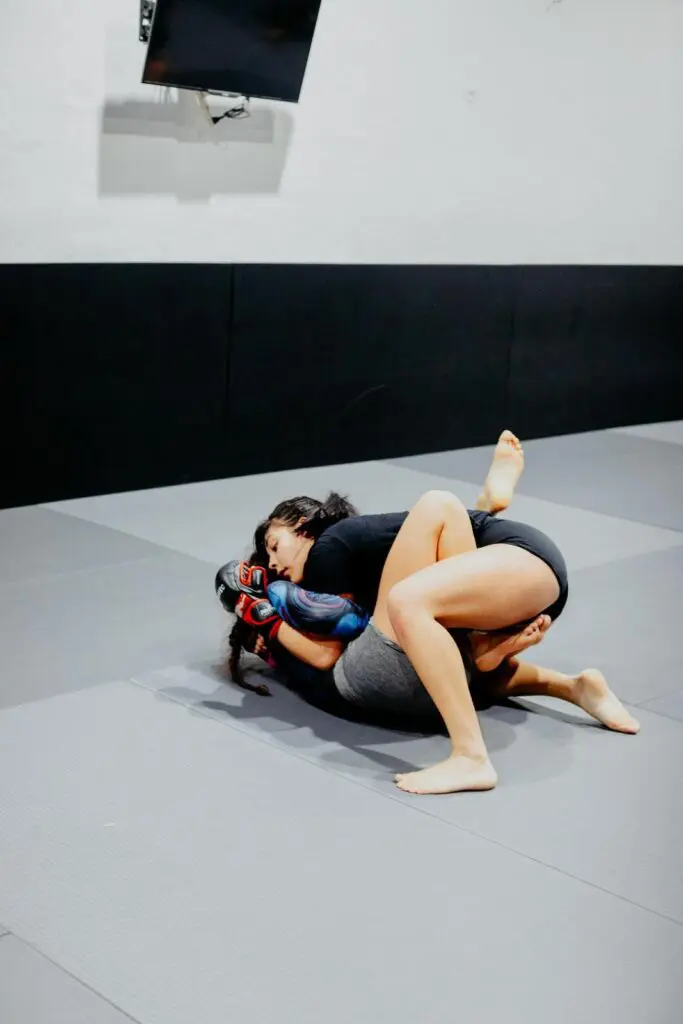
MMA Sparring Basics and Controlled Skill Development
Sparring gives us the opportunity to test skills against a moving partner.
But beginner sparring should not look like a professional fight.
Controlled sparring allows us to practice timing, distance, defense, transitions, and decision-making without turning every round into a competition.
Why Sparring Intensity Should Be Managed
If beginners spar too hard, they often stop thinking clearly.
They tense up, rush attacks, forget defense, and fall back on instinct instead of the techniques they have practiced.
Managing intensity creates enough space for learning.
This approach is central to MMA sparring control for beginners, where controlled rounds help students apply techniques while maintaining awareness and safety.
Technical Sparring Versus Hard Sparring
Technical sparring focuses on specific skills at manageable intensity.
One round might focus on jab entries. Another might limit the available techniques or start from a particular position.
The goal is development rather than winning.
Harder sparring may eventually have a role for experienced competitors, but beginners usually gain more from controlled practice where mistakes can be recognized and corrected.
Developing Timing Without Trying to Win Every Exchange
Timing develops through observation.
We learn when an opponent is moving forward, when their weight is shifting, and when their guard opens.
Trying to dominate every exchange often causes us to force techniques rather than recognize natural opportunities.
Controlled sparring gives us time to develop patience.
How Controlled Rounds Build Decision-Making
MMA requires constant decisions.
Should we strike, clinch, change levels, create space, or recover position?
Controlled rounds allow us to work through these questions in real time without becoming overwhelmed by intensity.
Over time, decisions become faster and more natural.
Common MMA Beginner Mistakes
Knowing what not to do can prevent months of poor habits.
Several mistakes appear regularly among new students.
Trying to Learn Too Many Techniques
Beginners often want to learn everything immediately.
But trying to memorize dozens of submissions, takedowns, and combinations usually slows progress.
It is better to develop a small group of reliable skills through repetition.
A dependable jab, basic takedown defense, strong positional awareness, and one or two escapes provide more value than a long list of techniques we cannot perform under pressure.
Treating Striking and Grappling as Separate Skills
MMA requires these areas to interact.
We need to understand how striking distance becomes clinch distance, how the clinch leads to takedowns, and how failed takedowns create other positions.
That connection is what turns separate techniques into MMA.
Using Strength Instead of Position
Strength can sometimes hide technical mistakes.
A beginner may force a movement against another beginner and assume the technique is correct.
But strength fades as fatigue increases or opponents become more experienced.
Good position, leverage, and timing are more reliable.
Sparring Too Hard Too Soon
Hard sparring may feel like fast progress, but it often causes beginners to become tense and defensive.
Technical sparring gives us more opportunities to experiment and learn.
Intensity should increase only as skill, control, and defensive awareness improve.
Ignoring Defense and Recovery
Attacks are exciting, but defense keeps the rest of our game functioning.
Beginners should spend significant time practicing guard position, takedown defense, frames, escapes, and recovery.
The ability to recover from a bad situation creates confidence that aggressive techniques alone cannot provide.
A Practical MMA Skill Progression for Beginners
A clear progression prevents training from becoming random.
Beginners do not need to learn everything at once. They need to develop skills in an order that makes each new layer easier to understand.
Build Reliable Fundamentals
Start with stance, movement, guard, basic punches, simple kicks, takedown entries, takedown defense, positional awareness, and ground escapes.
Repeat them often.
These skills become the platform for everything more advanced.
Learn to Connect Ranges
Once basic movements feel familiar, we start linking them.
A jab can lead into a clinch entry. A clinch can become a takedown. A ground escape may create an opportunity to stand.
These sequences teach us how MMA actually flows.
Add Controlled Resistance
Next, partners begin resisting more realistically.
They defend our attacks, change positions, and force us to adjust.
The goal is not full competition intensity. It is learning whether our technique still works when the other person is no longer cooperating.
Refine Timing and Decision-Making
Eventually, the biggest challenge becomes choosing the right technique at the right time.
We learn to recognize distance, reactions, openings, and threats more quickly.
This is where MMA starts to feel less like memorizing movements and more like solving problems in real time.
How MMA Beginner Fundamentals Create a Foundation for Advanced Skills
Advanced MMA techniques still depend on basic mechanics.
A spinning kick requires balance. A complex takedown setup requires proper distance and timing. A submission still depends on positional control.
MMA beginner fundamentals never disappear. They become more refined.
Complexity Comes After Control
Complex techniques only work consistently when basic movements are reliable.
If our posture, stance, or balance breaks down, adding more complicated techniques usually creates more problems.
Control comes first.
Why Fundamental Skills Remain Important at Higher Levels
Experienced fighters still use jabs, basic footwork, takedowns, frames, and fundamental escapes.
What changes is how precisely they use them.
Better timing, setups, reactions, and decision-making make simple techniques more effective.
This is why practicing fundamentals remains valuable even after years of training.
Building an Adaptable MMA Skill Set
Strong fundamentals give us options.
Against a striker, grappling can help us change the range. Against a grappler, footwork and takedown defense can help us manage distance.
The goal is not to depend on one favorite technique. It is to understand enough of each range to make useful decisions wherever the exchange goes.
Common Questions
1. What should a beginner learn first in MMA?
Beginners should first develop stance, movement, basic striking defense, simple punches and kicks, balance, takedown awareness, positional grappling, and safe escapes.
The goal is not to memorize a large number of techniques. A better foundation comes from learning a few dependable skills and understanding how they connect.
2. Do beginners need experience in another martial art before starting MMA?
No previous martial arts experience is required.
MMA fundamentals can be introduced progressively through striking, grappling, defense, movement, and transition drills.
The most important thing is developing sound technique before increasing complexity or intensity.
3. Why are transitions so important in MMA?
Transitions connect striking, clinching, takedowns, and ground grappling into one continuous system.
A technique in one range often creates the opening for a technique in another. Learning those connections helps beginners react more naturally instead of treating each part of MMA as a separate discipline.
Your Journey Into MMA Starts Right Here
We covered a lot of ground in this guide.
You now understand how striking, grappling, defense, range changes, and transitions work together as one connected system. MMA beginner fundamentals are not about mastering everything immediately. They are about building reliable skills one step at a time.
A jab is not just a punch. It can manage distance or help create a clinch entry. A clinch is not simply a place where two people hold each other. It can create striking opportunities, takedowns, or escapes. A ground position is not just somewhere we end up after a takedown. It changes the decisions available to both people.
That is what makes MMA challenging and rewarding.
Your next step is simple. Pick one area we discussed, such as striking, grappling, defense, or transitions, and focus on it during your next week of training.
Write down 2 or 3 questions you still have and bring them to class. A good coach can help you understand where those skills fit into the bigger picture. Stay patient, focus on clean fundamentals, and avoid rushing toward advanced techniques before your basic movements feel dependable.
Every advanced MMA skill begins with the same foundation: good position, good timing, controlled movement, and consistent practice. Stop searching for MMA near me and join a trial class today!
